

From power generation and the history of the grid to what’s driving up your electric rates, RPA’s E&E team has been busy getting into all the details.
The current state of the electrical grid in New Jersey is solid but inconsistent. It provides strong reliability in more populous areas and weaker reliability in less populous ones. With improved resilience across the grid in the wake of Superstorm Sandy, there has yet been delayed movement toward large load inputs of renewables like offshore wind and associated infrastructure.
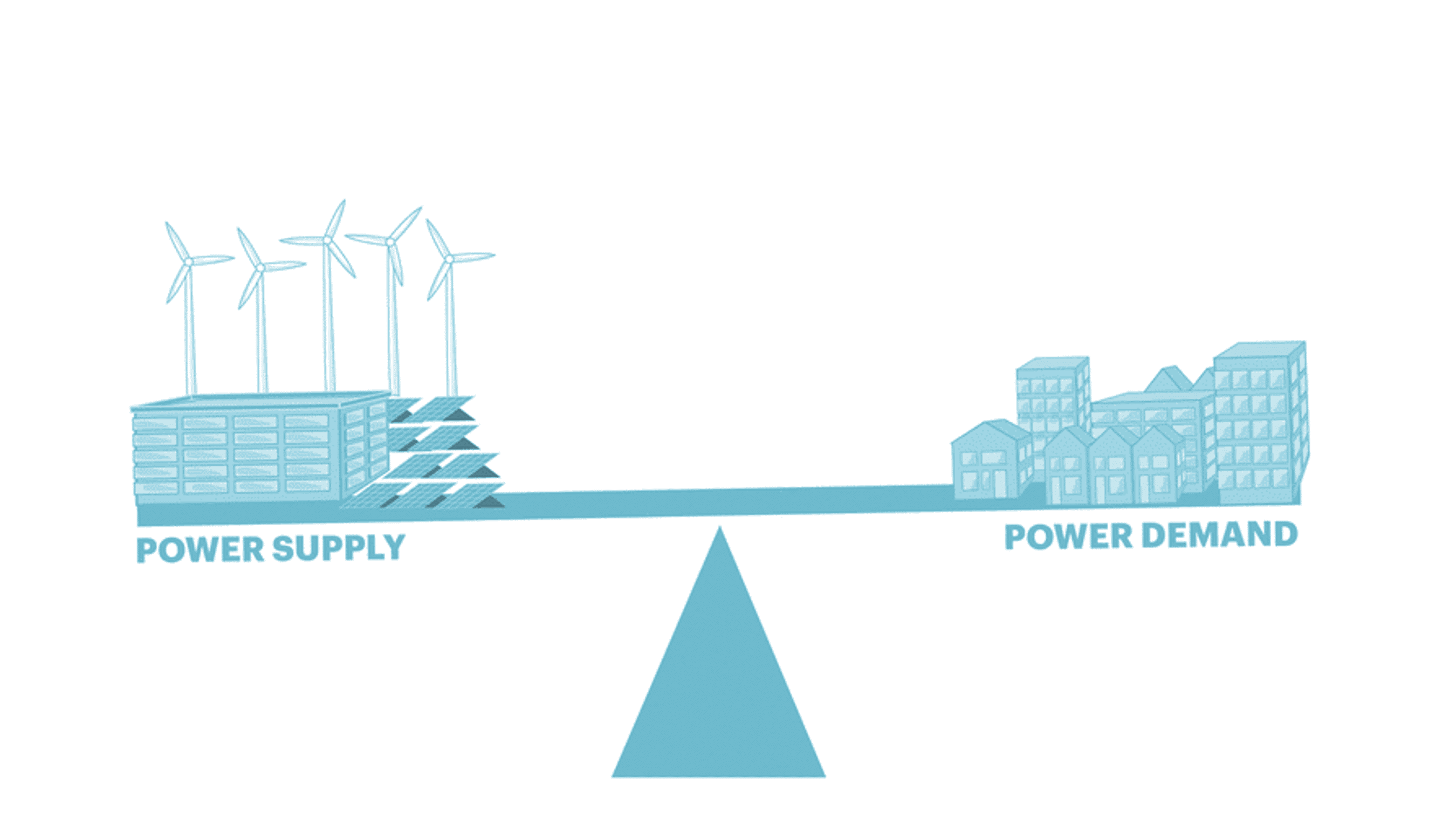
New Jersey’s grid operator, PJM Interconnection, is seeing an affordability crisis rise throughout its service territory. As energy demand and supply tighten, this rate affordability crisis is driven in part by the rapid growth of data centers - with generator deactivations and stagnant supply also looming as a threat.
While PJM does an excellent job keeping the lights on and getting power where it needs to be, there have been issues with the interconnection queue and market that have caused price spikes and future reliability concerns. The overall reliability of New Jersey’s grid has seen a remarkable shift since Superstorm Sandy knocked out power for thousands of residents, as utilities focused on storm hardening and climate resilience. Future concerns include generator deactivations, and supply not keeping up with demand. Age of infrastructure is also a concern, particularly with the price sensitivity ratepayers are feeling. The state of New Jersey is actively working on new grid modification rules to alleviate some of these concerns.
Key Facts
Grid Operator:
PJM Interconnection, Inc. (PJM)
State Utilities:
State Utilities: Public Service Gas and Electric (PSE&G), Jersey Central Power and Light (JCP&L), Rockland Electric (RECO), Atlantic City Electric (ACE)
Customers Served:
- PSE&G - 2.4 million
- JCP&L - 1.1 million
- RECO - 76,000
- ACE - 556,000
- Vineland Electric - City of Vineland
State Regulators:
- Board of Public Utilities (BPU)
Federal Regulators:
- Federal Energy Regulatory Commission (FERC)
- North American Electric Reliability Corporation (NERC)
Regional Entity:
- ReliabilityFirst (RF)
Generation:
- Around 70 generating stations including natural gas, hydroelectric, biomass petroleum, wind, and solar plants
- 48.6% Natural Gas
- 45.2% Nuclear
- 6.2% Non-Hydroelectric Renewables
Transmission & Distribution:
- 6,200 miles of high voltage power lines
- 57,000 Miles of distribution lines
The majority of information in this article was sourced from interviews with state regulators and utility companies. That information was supplemented from reports published by the public sector, PJM, and utility company websites.
Governance
New Jersey’s electricity transmission system, or “grid”, is part of the larger transmission system managed by PJM Interconnection (PJM). PJM manages the grid in all or parts of 13 states and the District of Columbia and is responsible for administering the wholesale power markets, monitoring and operating the transmission system, and conducting transmission planning studies across their region.

The utilities in New Jersey at the state level are regulated by the Board of Public Utilities (BPU). Federally, they are overseen by the Federal Energy Regulatory Commission (FERC) and the North American Electric Reliability Corporation (NERC), and at a regional level by ReliabilityFirst (RF), who work with NERC. RF works directly with utilities and other stakeholders in collaborative meetings throughout the year.
Generation
As part of the larger PJM system, New Jersey produces some of its own energy, while importing some from other states within the grid operator’s jurisdiction. In August 2025, New Jersey generated 5,951 GWh, and was projected to consume 8,192 GWh during the time period, requiring 2,241 GWh or over 25% of its electricity to be sourced from out of state. PJM as a whole buys and sells power to neighboring states and grid operators, including New York Independent Service Operator (NYISO). New Jersey’s in-state generation includes natural gas, nuclear, and renewables like solar and wind. As of May 2025, natural gas produced 48.6% of in-state generation, or 1,865 thousand MWh. Nuclear accounted for 45.2%, and nonhydroelectric renewables accounted for the remaining 6.2%. All of New Jersey’s nuclear power comes from the Salem and Hope Creek power plants in Salem County.
New Jersey’s climate and energy goals were set out in the state’s 2019 Energy Master Plan, and reaffirmed in the 2024 Energy Master Plan. Goals include 100% clean energy standard by 2035, 2 GW of storage by 2030, 3,500 MW of offshore wind by 2035, 11 GW of offshore wind by 2040, and 22 GW of solar and 9 GW of energy storage by 2050.
In 2025, New Jersey’s peak load is forecasted to be 19,436 MW, with the highest demand in July. By 2035, peak demand is forecasted to increase to 21,221 MW, also in July, and by 2045 peak demand is forecasted to increase to 23,602 MW, this time peaking in January. The forecasted switch to a winter peaking system is a reflection of the anticipated growth in the electrification of heating systems in buildings.
Transmission
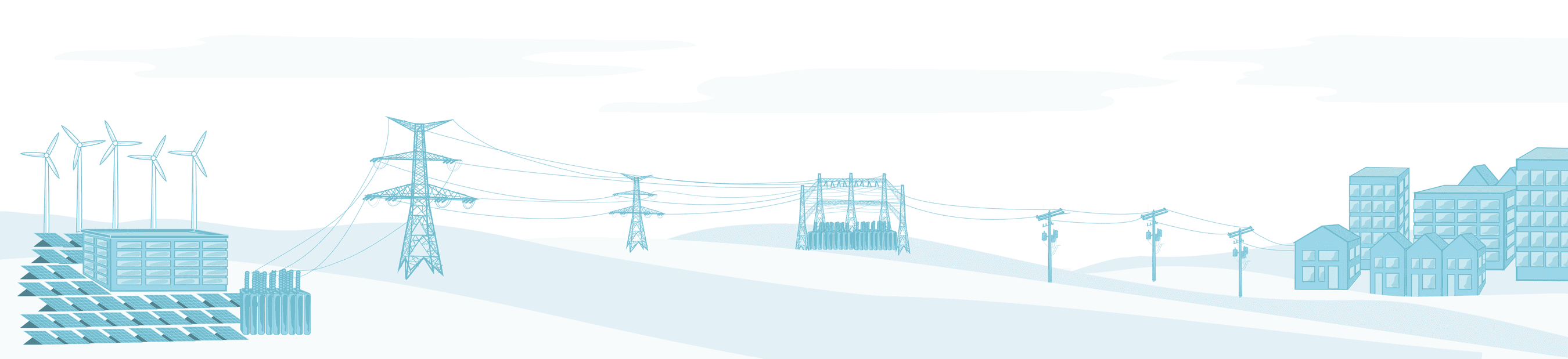
PJM’s transmission system consists of around 88,000 miles of high voltage transmission lines, serving 67 million people. Of that, New Jersey represents around 7%, with a total of 6,280 miles throughout the state.
While the transmission system in New Jersey is operated by PJM, it is built and maintained by individual utilities and developers. New Jersey has several interregional transmission ties with New York, including the 660 MW Hudson Line, the 660 MW Neptune Line, the 315 MW Linden Variable Frequency Transformer (VFT).
Distribution
New Jersey’s distribution system is managed by individual utility companies, the largest of which are Public Service Electric and Gas (PSE&G), Jersey Central Power and Light (JCP&L), Atlantic City Electric (ACE), and Rockland Electric (RECO). Rockland Electric is a unique utility as it is part of the larger Orange & Rockland utility, a New York based utility - not only does the utility cross state lines, but it extends across both PJM’s and NYISO’s service territory. The city of Vineland in Cumberland county also has its own electric utility company.
State of the grid
Despite some variability among various indices throughout the state, New Jersey has overall favorable reliability numbers. Three key reliability metrics, System Average Interruption Duration Index (SAIDI), System Average Interruption Frequency Index (SAIFI), and Customer Average Interruption Index (CAIDI), reflect this. In 2023, New Jersey’s SAIDI was 108.3 minutes per year of interruptions, its SAIFI was 0.881 interruptions per year, and its CAIDI was 123 minutes. These numbers include major outage events, and show that New Jersey has some of the highest reliability indices in the country.
There is, however, variation between grid reliability in the northern portion of the state which comprises PSE&G’s service territory, and the southern portion. Given the state’s historic development patterns over the past 100+ years - including more dense, populous, and industrialized communities in much of Northern New Jersey and along the I-95 Corridor, and more moderate and even rural development in much of the south - demand for electricity has led to a far more robustly developed grid in those more populous regions, leading to greater reliability in the PSE&G region.
Superstorm Sandy was a major transition point in the reliability of New Jersey’s grid. Around 2.4 million New Jersey residents lost power during or in the immediate aftermath of the storm. The damage caused by Sandy pushed local utilities throughout the entire state to not only repair their infrastructure, but to invest heavily in storm hardening. The progress made after Sandy led to the robust reliability New Jersey has today, even with more frequent extreme weather events. Despite current differences in reliability between the northern and southern parts of the state, the overall system reliability is much higher than it was pre-Sandy.
Rates
As of June 2025 - following a significant rate increase of as much as 20% - New Jersey had the ninth highest average electricity price in the country at 24.88 Cents per Kilowatt hour (kWh). Compared to the rest of the region, Connecticut’s electricity prices were 27.24 Cents per kWh, and New York’s prices were 26.53 Cents per kWh.
There are two main processes that determine the electricity rates in New Jersey. The first is PJM’s capacity auction, called the Reliability Pricing Model (RPM), which sets reliability requirements for power plants and pays power plant operators to run during peak demand scenarios. The second is the Basic Generation Service (BGS), run by the BPU, in which the New Jersey Utility Companies bid on power supply. There are several factors that affect rates including energy supply, demand, and energy prices.
More information about how the rates are set and factors that went into New Jersey’s most recent rate increase can be found in RPA’s recent lab post What’s happening with electricity rates in New Jersey.
Ensuring that the grid remains reliable, resilient, and responsive to changes in supply and demand requires sound planning and continuous investment. PJM, the state regulators, and the independent utility companies have all been proactive planners and investors in New Jersey’s grid, but need to accelerate planning and investment to keep up with rising demand.

PSE&G
120 year old utility company
14,200 miles of power lines
300 substations
SAIFI Index of 0.53 outages per customer per year
CAIDI index of 62 minute average disruption
Public Service Electric & Gas, or PSE&G, is New Jersey’s oldest and largest utility company, founded over 120 years ago and owned by Public Service Enterprise Group (PSEG). PSE&G has consistently had the highest reliability metrics out of all of the utilities in the state.
On the transmission side, PSE&G has large active transmission projects ongoing in six towns in the state, mostly in Essex County: Belleville, Clark, East Orange, Newark, Orange City, and Westfield. These projects are mainly reliability projects, upgrading existing infrastructure and building new substations in order to harden the 69kV network throughout the state. These projects are part of an ongoing initiative from PSE&G that has seen more than 575 miles of power lines updated since 2007 and a planned replacement of an additional 400 miles of power lines that are over 50 years old in the coming years. Those projects are part of the 69 kV Statewide Initiative, an effort to build out a 69 kV network that will reduce the demand on 26 kV and below networks. A 69kV network can carry 300% more power than a 26 kV network and the upgraded infrastructure will have grid enhancing technology to create a more resilient system.
Another major initiative within PSE&G is the Infrastructure Advancement Program (IAP). The IAP is a more than $500 million investment between 2022 and 2026 to modernize electric circuits, upgrade several substations, and improve last mile facilities in order to make the grid more resilient to severe storms.
In 2019, PSE&G initiated the second phase of the Energy Strong program, an $840 million program to strengthen the electric and gas system. The program included raising electric and gas infrastructure in flood zones, modernizing aging equipment, installing stronger poles and wires, and installing advanced monitoring technologies. Phase 2 built upon phase 1 of the Energy Strong program, which ran from 2014 to 2019, and focused on rebuilding and improving the electric system post-Sandy, including upgrades to 26 substations and 223 circuits. The company estimates that phase 1 alone improved the system so that power was restored 91% quicker during major events. Phase 2 concluded in 2023.

JCP&L
100 year old utility company
40,000 miles of power lines
SAIFI index of 1.44 outages per customer per year
CAIDI index of 119 minute average disruption
Jersey Central Power and Light, or JCP&L, is a 100 year old utility owned by FirstEnergy. JCP&L has been working to improve the reliability of their system, reducing the frequency of disruptions since 2017, although the average length of disruptions has stayed stable during that time period.
In 2023, JCP&L filed its EnergyizeNJ proposal. This program is intended to be a major infrastructure upgrade program, with the goal of improving reliability of the current system and preparing it for future grid enhancing technologies. The program includes upgrading over 450 miles of overhead and underground power lines, installing TripSaver technology on circuits to limit the frequency and duration of outages, and continuing storm hardening and resilience by standardizing voltages and building new circuits. EnergizeNJ also includes a substation modernization program which intends to upgrade substations to limit damage during outages and protect coastal substations.
JCP&L was awarded the New Jersey Clean Energy Corridor (NJCEC) projects by the NJBPU and PJM. This series of projects include transmission upgrades in existing right-of-way. These projects are intended to modernize the grid in New Jersey through improving the high voltage transmission infrastructure, allowing large energy generators to plug into the grid and deliver reliable power. While these projects came out of the PJM-BPU State Agreement Approach (SAA), which was intended to improve the interconnection process for offshore wind, these projects are not solely for the benefit of offshore wind, but rather the grid as a whole. As of August 2025, these projects were delayed 30 months by the BPU, citing ratepayer protection and federal policy on offshore wind.
JCP&L is also working on a smaller transmission project, the Montville-Whippany Reinforcement project, which is a new high voltage, 230 kV transmission line (high-voltage). The new line will connect two substations in Morris County, increasing reliability by adding redundancy to the system.

Rockland Electric
Rockland Electric is a unique utility, as it is a subset of Orange & Rockland, a New York based utility company. The company as a whole, has a combined 3,994 miles of overhead distribution lines, 1,849 miles of electric distribution line, and 547 miles of transmission lines spanning New York and New Jersey. The majority of those transmission lines are in New York, with only around 67 miles in New Jersey.
Rockland Electric’s combined New York and New Jersey reliability metrics are higher than the other utilities in the state. While their 2022 SAIFI index is lower than JCP&L at 0.93 outages per customer per year, their CAIDI index is comparable, at around 105 minutes per disturbance.

Atlantic City Electric
Over 100 year old utility company
8,500 miles of power lines
90 substations
SAIFI index of 0.71 outages per year per customer
CAIDI index of 84 minute average disruption
Atlantic City Electric, a subsidiary of the Exelon Corporation, was founded over 100 years ago and is the utility company for most of South Jersey, over 2,800 square miles. The Atlantic City Electric system has strong reliability metrics, seeing significant improvement over the last decade.
As the utility that was most significantly impacted from Superstorm Sandy in 2012, much of Atlantic City Electric’s ongoing work is focused on climate resilience and storm hardening. Post Sandy, the utility has been focused on withstanding extreme weather and improving reliability. They have been working on storm hardening by installing steel poles that can withstand high winds, and upgrading substations to be flood proof. They have also been installing technologies to automate their system, allowing the effects of outages to be minimized.
The utility is also working on a number of reliability projects. This includes a battery storage project in Beach Haven, as well one substation upgrade and four transmission line upgrades, totaling over 30 miles. The oldest line that is being upgraded was built in the 1930s, while the majority of the rest of the lines were built in the 1950s.

BPU
The New Jersey Board of Public Utilities (BPU) is the public service commission for New Jersey, the regulatory body that oversees all utilities in the state (electric, gas, water, etc.). The duties of the BPU include reviewing utility transmission and distribution plans, overseeing utility infrastructuring projects, and engaging with the regional grid operator, PJM. They also produce rules and regulations intended to improve the overall electricity grid in the state.
In 2022, the BPU released a grid modernization report, looking at potential pathways that could lead to grid upgrades in the state. That report identified processes that could be changed or updated to streamline the way grid upgrades are made and generators are connected to the grid. In May 2025, the BPU released a draft of their first set of rules on grid modernization. These rules are intended to speed the interconnection process in the distribution system, allowing projects to come online quicker. They aim to do this by updating hosting capacity maps more frequently, streamlining the dispute resolution process and pre-application process, and by including requirements that utilities must have a web portal for applications. The rules also change the fee structure for applications. The BPU is actively considering more grid modification rules, the next set being more focused on the technical aspects of upgrades.
In addition to the grid modification rules, in June 2025 the BPU approved Phase 1 of the Garden State Energy Storage Program (GSESP). This program aims to expand the amount of grid-scale storage in the state and is designed to help New Jersey build 2 GW of storage by 2030, in line with their climate goals. Tranche 1 of Phase 1 of the program aims to build up to 750 MW of transmission-scale projects. The board was set to make a decision on the bids received in Tranche 1 by the end of October 2025, but those awardees have yet to be announced. Tranche 2 of Phase 1 will solicit projects starting early 2026 with the goal of reaching a total of 1,000 MW between the two solicitations. Phase 2 of the program is currently in the works, but is expected to launch in 2026, and will be focused on grid connected and residential or commercial systems. Phase 1 of the program is funded through the New Jersey Clean Energy Program budget, and will not increase costs for ratepayers.
In 2024, the BPU signed on to the Northeast States Collaborative on Interregional Transmission, along with eight other states. The original purpose of the Collaborative was to maximize the potential of an offshore wind network, although the focus has shifted towards overall interregional connectivity to increase reliability and decrease constraints on the grid. The collaborative offers a venue for states that are not in the same grid operator, like New Jersey and New York, to work together more directly and figure out the most efficient ways to move energy throughout the region.
A major role of the BPU is working with PJM on grid planning. In 2020, PJM and the BPU moved forward with a State Agreement Approach (SAA), an existing provision within PJM that allows states to propose a transmission project to be included in PJM’s planning, to plan out New Jersey’s adoption of the legally mandated 7,500 MW of offshore wind and the associated transmission infrastructure. Prior to the SAA, the grid was built in a piecemeal fashion, with power plants coming online, then building out transmission infrastructure. The SAA addresses the need to plan for large generators collectively, while minimizing the impact to rate payers. The SAA has the potential to save New Jersey ratepayers $900 million. Through the SAA, the BPU laid out plans for the Prebuild Infrastructure project (PBI) and the Larrabee Collector Station (LCS). The LCS is designed to be a single point of interconnection for multiple offshore wind projects (or other large-scale clean energy projects), and the PBI is the associated infrastructure upgrades between the landfall site and the LCS. As of August 2025, these projects were delayed 30 months by the BPU, citing ratepayer protection and federal policy on offshore wind. Despite the delay, these projects are an example of good transmission planning and foresight of an innovative way to reduce transmission upgrade costs to ratepayers.
More recently, the BPU has taken a more active role in participation with PJM. Due to its advisory - not voting - role, the BPU has limited action it can take without broad support from other stakeholders. In response to recent rate hikes experienced in New Jersey and other PJM states, caused, in part, by failings of PJM’s interconnection queue and capacity market timing, the BPU hosted a technical conference on resource adequacy in New Jersey, exploring state specific solutions to rising energy costs. Along with the state-specific conference, the BPU and Governor Murphy hosted (with 12 other PJM states) a multi-state technical conference in September 2025 to convene experts in the electricity industry and explore ways to combat the energy affordability crisis. During this conference, several states, including Pennsylvania and Virginia, threatened to leave the grid operator if they did not have a larger say in the operator’s processes. PJM was open to discussions with the states, although some of the independent power producers within PJM pushed back against the Governor’s requests for a larger role.

PJM
PJM, the regional grid operator for New Jersey and all or parts of 12 other states, administers the wholesale power markets, monitors and operates the transmission system, and conducts transmission planning studies across its region. They produce annual reports on infrastructure and load (energy demand). PJM also manages an interconnection queue, which studies projects to determine their effect on the grid.
Some of PJM’s transmission planning processes include resource adequacy planning, interregional planning, and regional transmission expansion planning (RTEP). PJM’s 2024 New Jersey RTEP found that there was over $1.5 billion in investment throughout the state, including baseline, network, and supplemental projects.
In their 2024 New Jersey State Infrastructure report, PJM found that Natural Gas represented 69% of total installed capacity and nuclear represented 26%. This differs from the actual percentage of generation for the state - much of the natural gas capacity includes peaker plants, which only go on in times of high electricity demand. Stated capacity also does not equal actual generation - power plants have “capacity factors” or a percentage of actual electricity output compared to maximum possible output. Combined cycle gas plants, for example, run at around a 57% capacity factor. It also differs from PJM’s overall capacity makeup - the grid operator’s capacity is 49% natural gas, 21% coal, and 18% nuclear.
In July 2024, PJM’s capacity market cleared record prices, leading to significant rate hikes across its service territory. Factors that led to this rate hike included ongoing issues with the interconnection queue and PJM’s reliability rules (among others). In an effort to alleviate these issues, PJM worked closely with FERC to implement new rules surrounding their interconnection process. These rules shifted the interconnection process from a “first come first serve” basis to a “first ready first served” cluster process. PJM began this new process in 2023, and has made significant progress in studying projects since then.
In 2024, PJM put in place new capacity accreditation rules, which aimed to improve reliability. This rule was designed to better understand the reliability of any resources within the PJM system during extreme weather or peak load conditions, and was designed to ensure the grid is resilient in times of strain and reduce the expected loss of load during those events. While this is an inherently good rule that will increase system reliability in the long term, the immediate implementation of this rule during a time when new capacity is having a difficult time entering the system significantly reduced the available supply during the most recent auctions.
Load growth from data centers has become a major challenge within PJM’s system (more on that below). To better equip themselves to deal with this rising load, PJM has launched an effort to explore different options for adding large loads, such as data centers, to the grid without threatening reliability. This effort invokes the Critical Issue Fast Path (CIFP), which allows the PJM board and stakeholders to make accelerated decision making. This specific CIFP sought to utilize demand response on large loads, where the grid operator can manually reduce the amount of energy going towards a large load facility in times of peak demand. The grid operator is hoping these rules would go into effect by June 2026, in time for the capacity auction for the 2028/2029 service year. While many of PJM’s stakeholders, particularly data center companies, utilities, and power suppliers, would prefer a proposal that focuses on improving forecasting, planning, and the interconnection process, the rule change is currently under review. In May 2024, the selected 51 projects that can come online quickly, adding nearly 10 GW of capacity into the system through a process called the reliability resource initiative. Of those 51, 39 are uprates, mostly to gas plants. Of the new projects, half are gas, five are battery, and one is nuclear.
There are mounting concerns that can potentially have a significant impact on the future reliability of New Jersey’s grid. These include rising demand from data centers and other large loads, aging wires hindering new development, and climate change causing more extreme weather and wildfires.
Utility Concerns
Utility concerns in New Jersey are shared by regulators and neighboring states - rising demand for electricity, decreasing supply, and more extreme, less predictable weather.
Electricity demand is rising throughout each utility’s service areas. Year over year load growth is forecast to reach as high as 4% over the next ten years in some service areas. A more detailed breakdown of each utility’s expected load growth can be found in the next section. Much of this demand growth stems from large load projects, or single projects that use a large amount of energy, such as data centers. As of August 2025, PSE&G’s large load pipeline reached 9.4 GW. Although the utility only expects up to 20% of those to come online, that is over 1.8 GW of added demand onto the system.
Aging transmission and distribution infrastructure as well as generation infrastructure is a significant concern to utility companies. Generators are retiring faster than they are coming online, and other infrastructure is aging and needs to be replaced. There are also significant concerns with the PJM capacity market, which PSE&G referred to as “flawed and not attracting new power supplies”. More information on the PJM capacity market can be found in RPA’s lab post, What’s happening with electricity rates in New Jersey?.
With the expansion of solar and other distributed energy sources, aging circuits are struggling to keep up with the demand for behind-the-meter solar. A “closed circuit” prohibits any new generation or significant demand source from coming online at that circuit location, preventing residents and businesses from installing solar or energy storage – both desirable technologies for grid resilience. Behind-the-meter, or customer-side, is smaller scale solar that does not provide energy to the larger grid, but rather powers the customer’s building (ex. a residential building). In Atlantic City Electric’s service territory, 49 out of 327 circuits are closed, or 15% of all circuits. In PSE&G’s service territory, 150 out 1,936 circuits are closed, or 7.7% of all circuits.
Utilities are also concerned about vegetation management and extreme weather. Vegetation management is something all utilities have to deal with in the normal course of business - a fallen tree or overgrown weeds can cause serious issues if not dealt with properly. It has become a higher priority recently as New Jersey has seen an increase in wildfires, with nearly 1,500 in 2024 alone. Extreme weather events such as hurricanes and Nor’easters are also a major concern, as evidenced by the amount of investment utilities have made in storm hardening.
PJM Concerns
As previously mentioned, one of PJM’s major roles is transmission and load planning for the future. In PJM’s 2025 Load Report, it found that data centers are dominating load growth. In fact, PJM’s independent market monitor attributed $9.3 billion of the $14.7 billion total increase in the capacity market clearing price to demand growth from data centers. System wide, due to the expansion of data centers and other large loads, PJM is forecasting a 3% increase per year in summer peak load over the next 10 years, and a 2% increase per year over the next 20 years. That equates to a roughly 56GW increase in peak demand by 2035, and a 74GW increase by 2045. The winter peak load is expected to grow even more than the summer peak load - 3.8% per year over the next 10 years, 2.4% over the next 20 years - an increase of 62 GW by 2035 and nearly 83 GW by 2045. The net energy growth is expected to be 4.8% per year over the next 10 years, and 2.9% over the next 20 years.
While load growth in New Jersey’s utility service areas is not as high as the total PJM area, it is still significant. Atlantic City Electric has the smallest overall load growth, with only 0.1% per year over the next 10 years and 0.4% per year over the next 20 years for the summer peak, and 2.4% per year over the next 10 years and 2.2% per year over the next 20 years for the winter peak. After Atlantic City Electric, Rockland Electric has the second smallest load growth. For summer peak, there is only a projected 0.1% growth per year over the next 10 years, and 0.5% increase over the next 20. Annual winter peak load growth ranges from 2.6% over the next ten years to 2.3% over the next 20 years. PJM anticipates both JCP&L and PSE&G to have significant annual load growth, particularly in the winter. JCP&L’s annual summer peak load growth is projected to be 0.5% over the next 10 years, and 0.8% over the next 20 years. The annual winter peak load growth is projected to be 3.9% over the next 10 years and 2.9% over the next 20 years. PSE&G’s annual summer peak load growth is projected to be 1.3% over the next 10 years and 1.1% over the next 20 years, and the annual winter peak load growth is projected to be 4.0% and 2.9% for the same time periods. PJM attributes this growth to the growth in data center load and port electrification in the Port of Newark.
With the rise of data centers, supply and demand has become a serious concern. PJM has significant generation resources as of right now, but as generator retirements continue and supply is constrained, particularly with federal policy surrounding offshore wind, supply could come dangerously close to demand, and demand could perhaps surpass supply without addition of significant supply. In June 2025, peak demand significantly surpassed the initial predicted demand, reaching 161 GW, 7 GW higher than the forecasted peak of 154GW - the highest demand since 2011.
Regulator Concerns
State regulators share the same concern as PJM in regards to rising energy demand and decreasing supply. They also have concerns with climate change related weather shifts, vegetation management, distribution system reliability, and their role in PJM’s decision making.
As the climate of New Jersey changes, there has been more extreme weather. Superstorm Sandy was one of the first examples of how extreme weather can affect the grid, and there have been several severe weather events since then that have caused millions of dollars in damage and led to outages across the state, although the duration of those outages have significantly dropped post-Sandy. Another major climate concern are wildfires. Wildfires have increased in frequency due to hotter and drier weather. In 2024, there were nearly 1,500 wildfires across the state. Wildfires can cause line failures and destroy substations, transmission and distribution towers, and other energy infrastructure. Vegetation management programs are an important method to help mitigate the effects of wildfires and prevent outages even in non-fire conditions, but can only do so much.
With the recent rate hikes affecting New Jersey ratepayers particularly hard, the BPU is looking to have a bigger say within PJM. Right now, the state only has an advisory role in PJM, and while PJM listens to the state’s concerns, they have little power to make any changes unless they act with several other states. The consumer advocate in New Jersey has a vote, but not the BPU. A vote from the BPU or Governor would allow elected officials to have a larger say in how the rates are set - right now, about two thirds of the bill is out of the hands of the state and local utilities. While PJM is an excellent grid operator in terms of managing the flow of electricity, there have been recent issues that have led to states wanting a larger say in the markets.
New Jersey is a net electricity importer, meaning that they require energy from other states in order to meet their demand. While being an energy importer is not inherently bad, particularly when part of a larger grid operator, there is a concern that if levels of supply approach levels of demand across the grid, it could significantly affect costs, and impact New Jersey particularly hard. The loss of near-term offshore wind significantly hurts New Jersey’s energy system and planning. The state was expecting 11 GW of offshore wind in the next fifteen years, and it is increasingly unlikely that target will be hit. New Jersey is already constrained in capacity, and the loss of expected generation could lead to more costly energy prices in the future, either from the need to build more expensive forms of generation, or from more expensive supply charges in future capacity markets. Some of that generation can be replaced by solar, but offshore wind is a far more efficient source of energy, with a significantly higher capacity factor. New Jersey is fairly geographically constrained to build large-scale power plants onshore as well. Battery storage, demand response, and virtual power plants can all also help fill that gap.

