

From power generation and the history of the grid to what’s driving up your electric rates, RPA’s E&E team has been busy getting into all the details.
The State of the Grid in Connecticut is good — for now — with need for improvements in the future. Connecticut’s regional grid operator, ISO-NE, has done an excellent job maintaining system reliability and even improving it through comprehensive planning over the last two decades throughout the greater New England coverage area. Within the state, the distribution system is robustly reliable due to proactive upgrades and replacement of aging infrastructure by utility companies, with assistance from state regulators and the grid operator. Still, there is a significant amount of infrastructure over 40 years old, and in need of upgrading/replacing. Future concerns include regulatory and economic pressures that could keep utilities and transmission owners from performing more upgrades, potentially affecting future reliability. Generator deactivations are also a major concern, but New England has been making good progress to replace aging generators with clean energy.
Key Facts
Grid Operator:
ISO New England
State Utilities:
Connecticut Light & Power (Eversource) & United Illuminating Company (Avangrid)
Population Served:
- Eversource - 1.2 million customers across 157 municipalities
- Avangrid - 347,000 customers across 17 municipalities
- Municipal utility companies (munis) - the remainder of the state
State Regulators:
- Public Utilities Regulatory Authority (PURA)
- Department of Energy & Environmental Protection (DEEP)
Federal Regulators:
- Federal Energy Regulatory Commission (FERC)
- North American Electric Reliability Corporation (NERC)
Regional Entity:
Northeast Power Coordinating Council
Generation:
- 60% Natural Gas
- 33% Nuclear
- 6% non-hydroelectric renewables
Transmission & Distribution:
9,000 miles of high voltage power lines

The majority of information in this article was sourced from interviews with utility companies and government regulators. That information was supplemented with reports published by the public sector, ISO New England, and utility company websites.

Governance
Connecticut’s electricity generation, transmission, and distribution system, or “grid”, is part of a larger system managed by ISO New England (ISO-NE), which manages the grid in all New England states. The utilities in Connecticut at the state level are regulated by the Public Utilities Regulatory Authority (PURA) as well as the Department of Energy & Environmental Protection (DEEP). Federally, they are overseen by the Federal Energy Regulatory Commission (FERC) and the North American Electric Reliability Corporation (NERC), and at a regional level by the Northeast Power Coordinating Council (NPCC), who work with NERC. NPCC works directly with utilities and other stakeholders in collaborative meetings throughout the year.
Generation
New England generates most of its own power, but also purchases power from Canada and New York. Connecticut, however, is a net exporter of power - meaning it produces enough energy to meet its own demand and transmit additional power into the larger grid - with a mix of energy sources. In 2023, natural gas accounted for 60% of Connecticut’s total electricity generation, with nuclear accounting for 33% and 6% from non-hydroelectric renewable sources. The last coal power plant in the state was retired in 2021. Generating units are owned by a variety of entities, including municipalities, dedicated energy generation companies, Universities, nationwide utility companies, and investors.
Much like the rest of the region, Connecticut has ambitious climate and energy goals. Those goals include 40% of electricity from renewable sources by 2030 and 100% by 2040 in addition to 580 MW of storage by 2030 with a total of 1000 MW by 2040. Connecticut is also hoping to reduce building energy consumption through energy efficiency by 20% by 2030.
Since the early 2000s there has been a steady growth of renewable energy sources in New England. Due to limited available land for onshore renewable generation, Connecticut has only seen moderate growth of renewable energy resources compared to the rest of the region, with 11,706 MWh generated from solar and wind in 2014 growing to 430,890 MWh in 2023.
Transmission
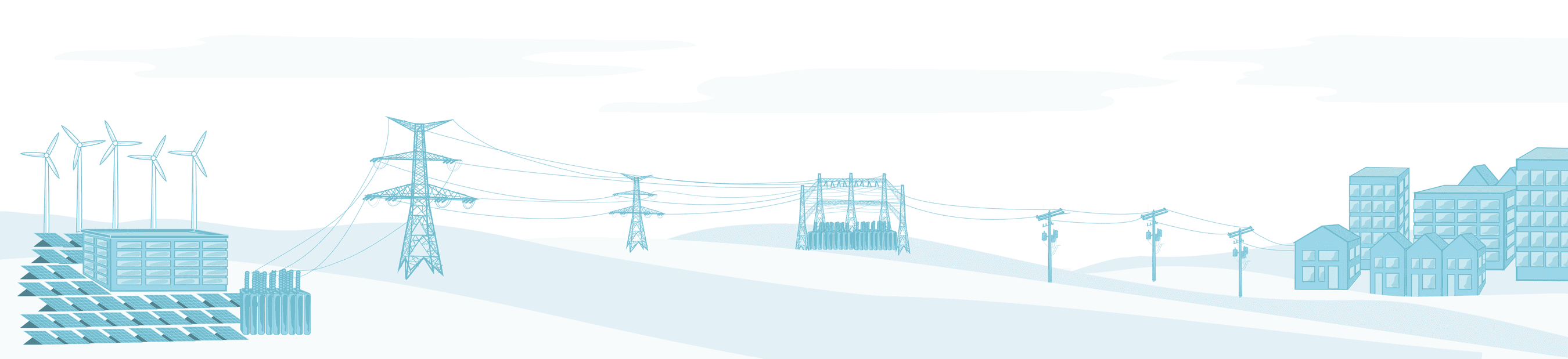
New England’s transmission system consists of around 9,000 miles of high voltage power lines and associated infrastructure such as substations and transformers. It is a highly interconnected system with 2,000 MW worth of transmission interconnections, or connection between the smaller regional grids that make up the larger east coast grid, between New York and New England alone and has some of the lowest congestion costs in the country. Congestion refers to when electricity demand is greater than transmission capacity, leading to increased prices for electricity. The more interconnected a system is, and the denser the network of transmission and distribution infrastructure is, the less congestion there is in the system. In Connecticut, smaller regional grids grew naturally over time and established transmission ties between neighboring regions to increase reliability, forming larger grids.
New England has one of the highest spending on transmission out of any region in the United States - the utility companies in the region spend a combined $5.90 per MWh of demand on transmission through repairs, upgrades, and vegetation management. For comparison, Florida only spends $0.17 per MWh of demand served. Connecticut’s 9,000 miles of high voltage transmission lines are largely owned and maintained by the two largest utility companies in the state - Eversource and the United Illuminating Company. The actual flow of power through the transmission lines is managed by the ISO.
Distribution
Connecticut’s distribution system is owned and managed by individual utility companies, the largest of whom are Eversource (operating as Connecticut Light and Power in Connecticut) and the United Illuminating company (“UI”, an Avangrid company). UI serves around 347,000 customers, dispersed between 17 towns and cities, while Eversource serves the rest of the state, with the exception of a few municipalities who are served by municipal utility companies, or “munis”. In addition to managing the distribution system, utilities act as an intermediary between the ISO and the customer, managing billing and making sure energy reaches homes, businesses and critical facilities.
State of the Grid
Overall, New England’s grid and Connecticut’s distribution system are in good shape. Over the last fifty years, New England utility companies and transmission owners have consistently upgraded their equipment, replacing old infrastructure with newer, more reliable infrastructure. The Connecticut utility companies have also been upgrading their distribution systems, to the point where they are very reliable and resilient. The ISO-NE grid and Connecticut’s distribution system shows robust reliability, with essentially no significant outages since the blackout of 2003. The two key reliability metrics, System Average Interruption Duration Index (SAIDI) and System Average Interruption Frequency Index (SAIFI), reflect this. In 2023, Connecticut’s SAIDI was 164.6 minutes per year of interruptions and its SAIFI was 0.872 interruptions per year per customer. These numbers include major outage events. Despite this, much of the existing infrastructure was built in the postwar economic boom of the 1950s and 1960s, with some infrastructure from over a century ago.
Rates
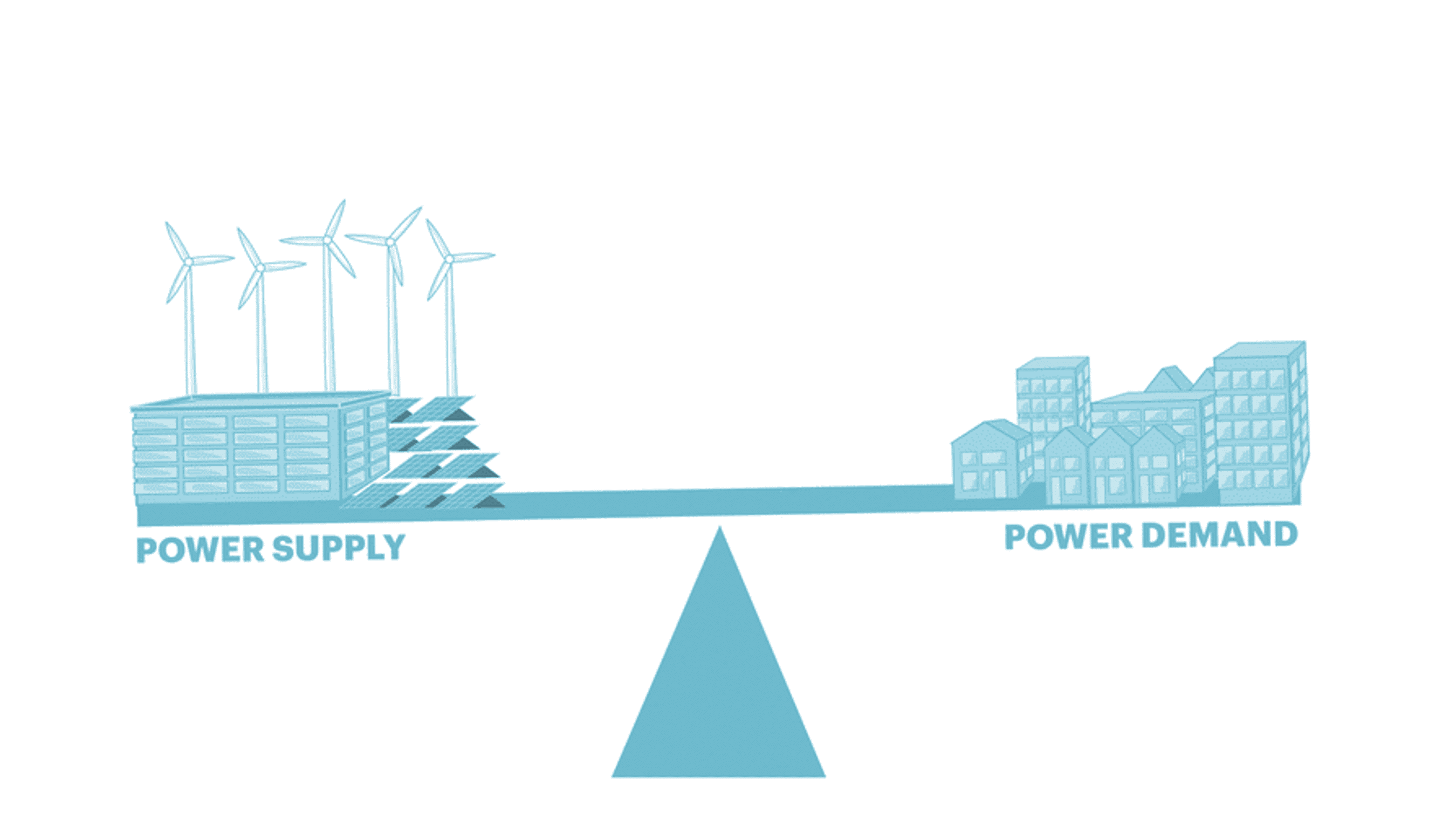
Ensuring that the grid remains reliable, resilient, and responsive to changes in supply and demand requires sound planning and continuous investment. ISO-NE, United Illuminating Company, and Eversource have each been proactive and effective planners and investors in Connecticut’s grid.

In 2007, ISO-NE along with FERC helped found the New England States Committee on Electricity (NESCOE) to pursue the six New England States’ common interests around providing affordable and reliable electricity to their customers. To further these interests, several states within the ISO, including Connecticut, signed a memorandum of understanding with the Northeast States Collaborative on Interregional Transmission to coordinate transmission planning throughout the Northeast. The ISO also conducts its own long-term planning outside of these organizations modeling demand and supply every five years through 2050. Its latest 2050 Transmission Study identified “no regrets” upgrades to the transmission system and methods for procuring new low-cost generation.
Following the roadmap laid out by previous studies and the 2024 report, transmission operators (TOs) throughout New England have made significant investments in their assets. From 2016 to 2024, they invested over $9 billion in “asset condition” projects, and are expected to invest another $6.5 billion through the end of this decade. “Asset condition” projects include the replacement of existing, deteriorating infrastructure with new, more reliable and resilient infrastructure. This could include replacing power lines, transmission towers, or substations. Many of these projects have involved replacing 60-80 year old infrastructure built in the postwar boom that has reached the end of its useful lifespan. In addition to “asset condition” projects, TOs have invested $2.2 billion in “new reliability” projects, or projects that build new infrastructure to improve reliability, since 2018. Proactive investment in infrastructure has enabled New England to have extremely low congestion costs and high reliability within their system, and energy efficiency upgrades have curtailed load growth (reduced energy demand).

The United Illuminating Company is one of the country’s oldest utilities, founded in 1899. Part of Avangrid, the utility has made significant progress upgrading their system, recently decommissioning their last 4 kV line (including century old power lines and substations) from their distribution system, bringing the baseline of their system up to 13.8 kV, part of a 30 year long upgrade process. This forward-thinking work has allowed their distribution system to be extremely reliable, with most of the distribution system using smart meters to monitor power. In 2024, UI’s System Average Interruption Duration Index (SAIDI) was around 61.3 minutes per customer, and their System Average Interruption Frequency Index (SAIFI) was around 0.71 per customer. Due to a limited amount of space and a relatively small service area, there is little interconnection of renewable energy in UI’s service area.
One of the largest projects UI is currently working on is rebuilding the overhead transmission lines along the Metro-North Railroad. This project, estimated to take 11 years, will upgrade decades old infrastructure and replace it with new, higher voltage cables. Much of the transmission infrastructure owned by UI is along the Metro-North, with voltage ranging between 115 kV and 345kV. With many of their customers located near the water, they are focused on climate resilience projects, such as floodwalls around substations, which will protect their infrastructure from severe weather and rising seas. UI is anticipating a modest rise in demand over the next ten years, rising from a peak load of 1,257 MW in 2025 to 1,395 MW by 2034 in the normal weather scenario. There is no extreme weather scenario. This load growth is based more on electrification and population growth than industry growth, such as data centers, although Connecticut is seeing a much slower growth in data centers than other states in the region.

Eversource traces its roots back over a hundred years, forming from small local distribution companies merging, and resulting in the large utility company it is today. Similar to UI, Eversource has made consistent upgrades to their infrastructure over the past few decades. The company shares the responsibility of transmission planning for their service territory with ISO-NE, focusing on more local transmission and distribution system needs. They have been working on asset condition projects and building new infrastructure projects, including rebuilding 60 - 100 year old transmission lines throughout the state, as well as rebuilding and moving existing transmission infrastructure over the Metro-North Railroad, much like UI. Three of these rebuild projects are replacing 115 kV lines and associated infrastructure such as towers, substations, and ground wires. They are also working with the Connecticut Department of Transportation to build out charging infrastructure for the state’s fleet of electric buses, and working on renewable energy generation interconnection projects. A complete list of projects can be found in their Local System Plan. Storm hardening is another priority for Eversource. With extreme weather events increasing in frequency, work is being done to protect their system from outages, particularly with substations located in flood zones. On the distribution side, projects include grid modernization, smart switches, connection to solar systems, demand management, and energy storage.
Eversource runs their distribution system on voltage as low as 4.8 kV and as high as 345 kV, with their transmission system running up to 345 kV. The 4.8 kV lines are some of the oldest lines in their system, designed for a time when less power was needed in the system. The work Eversource has done over the last decade has improved their reliability in outages, performing significantly better than the industry average in key areas such as System Average Interruption Frequency Index (SAIFI) and System Average Interruption Disruption Index (SAIDI) - in 2021, the SAIFI index was 0.686 interruptions per customer, compared to a first quartile average of 0.86 interruptions per customer, and the SAIDI index was 76.0 minutes per customer, compared to a first quartile average of 100 minutes. Eversource is expecting a moderate demand growth, rising from a peak load of 4,563 MW in 2025 to 4,856 MW by 2034 in a normal weather scenario. In an extreme weather scenario, peak load may rise to 5,270 MW. While the near term load growth is driven by population growth, long term load growth will likely be pushed by electrification and large load centers, such as data centers or manufacturing hubs. Eversource has a much larger service territory than UI, making it a much more likely center for increased demand from large loads.
In conversations with utility companies and government regulators, as well as research into studies and reports, some future concerns about the grid were identified, and are summarized below.
ISO Concerns
In its Connecticut 2034 Needs Assessment, ISO-NE found that there were no stability or short circuit needs identified. It did, however, find that there were time-sensitive steady-state needs. Steady state refers to the system of AC power substations and distribution facilities, including power lines and transformers, at a steady voltage, meaning that the entire distribution is operating as it is supposed to, at equilibrium. The study found 58 violations in substations across Connecticut. Most of these are time sensitive repairs that must be completed before 2034. The study also found that when the system is at peak load, there are five potential thermal overloads, or potential for equipment to overheat beyond operability, on power lines and 12 substations with voltage violations. One potential solution to the violations found by the study are FACTS devices, or Flexible AC Transmission Systems, a form of Grid Enhancing Technology (GET) that help manage the flow of electricity and increase efficiency in the transmission system. FACTS devices and other GETs are a critical component of grid modification, as they are non-wire solutions to increasing operational efficiency within the grid, allowing for more power to pass through and reducing congestion in the flow of power.
Regulator Concerns
While the grid is currently in good shape, regulators have some concerns for the future. Regional electricity demand in New England is expected to double by 2050 - while Connecticut’s demand may not double in that time period, it is still affected by rising demand in the region. In Connecticut, over 80 transformers may need to be replaced as they become overloaded, and an additional 40 transformers may need to be added as regional demand rises. Ratepayer costs are also increasing, in part due to asset condition and transmission service projects. Since 2015, transmission costs have grown and now make up 11% of Connecticut customers’ bills. Regulators are concerned that TOs are “gold plating” asset condition projects, meaning that TOs are adding unnecessary investments to get a higher return. Other concerns include supply chain issues from the pandemic still affecting infrastructure, leading to a four or more year lead time and higher costs for transformers and other equipment, and the long timeline for siting and permitting of assets. One potential solution would be to replace existing lines with advanced conductors and install Grid Enhancing Technologies onto infrastructure, but that does not lead to as high of a return on investment (ROI) compared to new infrastructure.
On August 23rd, 2025 the Trump Administration issued a stop work order for Revolution Wind, an offshore wind project that is more than 80% complete and was expected to power over 350,000 homes across Rhode Island and Connecticut. The Governors of both states quickly issued statements stating that this move will hurt jobs, energy prices, and reliability. State regulators in both states also warned of the possibility of severe impacts to reliability, particularly since no source of generation would be able to quickly replace the expected incoming generation. On September 4th, 2025, both states as well as the developer, Ørsted, sued the federal government. On September 22nd, 2025, a Federal judge ruled in favor of Ørsted, allowing the project to continue.
Utility Concerns
Utility concerns about the future of the grid include reliability issues associated with load growth and stalled investment. These concerns stem from differing viewpoints and lack of collaboration between regulators and the utility companies. Connecticut has ambitious clean energy goals, looking to fully decarbonize by 2040. This is a massive undertaking, especially since 60% of the state’s energy comes from natural gas, and will require coordination of all of the states within ISO-NE. With these goals, it is necessary to build out and invest in the transmission system - distributed energy resources (DERs) such as wind and solar are not typically located near population centers like traditional power plants are, so a new network of transmission lines and substations will be required to bring power from DERs to demand centers. Utility companies operate based on cost recovery, and without a comprehensive road map on how and where to move forward on infrastructure, they cannot adequately plan their investments. This has caused the utility companies in Connecticut to scale back their investments in distribution assets as they do not have a clear pathway towards cost recovery. In contrast, when Massachusetts set their clean energy goals, the state legislature had all utility companies in the area submit Electric Sector Modernization Plans (ESMPs) to create roadmaps towards grid modernization, giving both the state government and the utilities a clear pathway on how to upgrade the grid in a cost effective manner, and are successfully lowering costs while upgrading the grid for the future.
Utilities also see operational challenges with solar energy. Solar energy peaks during midday and reduces load on the system. The issue comes when the sun sets and the load spikes again. Battery storage can help stabilize the grid but current battery technology can only supply energy for a few hours at a time, not the whole night. There are also challenges with mixing solar and nuclear energy, since nuclear runs at a similar level all times of day - running nuclear and solar at the same time may lead to excess power during the day, which is wasted unless it can be captured and stored by energy storage systems.
Similar to regulators and the ISO, utility companies are concerned about load growth and large loads. If a large load center, such as a data center, were to be built in an area with high supply and low demand that traditionally exports power, such as eastern Connecticut, it would change the flow of power, exporting less power to neighboring states and instead sending power to the large load. Since electricity markets typically depend on the transfer of power from neighboring states, this could lead to higher energy costs as demand increases and supply decreases, or in a worst-case scenario, brown outs or black outs due to a lack of available power supply.
Shared Concerns
There are several concerns that are shared by all stakeholders in the grid in Connecticut and New England as a whole. These include interregional transmission planning, right-sizing, and energy affordability.
Interregional transmission planning involves building transmission ties between the regions surrounding New England - mainly New York and Canada. Increasing interregional transmission increases reliability of the system by reducing strain through the ability to route power to demand centers from areas of high supply and low demand. In 2024, FERC released a transmission planning study and issued new rules around cost allocation (the determination of who pays for what part of the upgrade), requiring transmission operators to produce a 20 year regional transmission plan every five years and applicants, such as transmission developers or utilities, to have a six-month engagement period to determine cost allocation. On a regional level, in June 2025 the Northeast States Collaborative on Interregional Transmission issued an RFI on interregional planning and cost allocation. This RFI will potentially inform how transmission buildout is paid for, determining whether the costs goes onto ratepayers of one state or another, the developer, or another entity. ISO-NE, PJM, and NYISO coordinate on interregional planning through an Interregional Planning Stakeholder Advisory Committee (IPSAC) and the Joint ISO/RTO Planning Committee (JIPC). What all stakeholders can agree on is that interregional transmission is necessary for a reliable grid; what they cannot agree on is cost allocation - who pays for what percentage of the new transmission infrastructure. A potential model for interregional transmission cost allocation is the Western Energy Imbalance Market (WEIM), which automatically finds the lowest cost pathway to serve demand in most of the western interconnection, instead of through lengthy rate cases or arbitration.
Right-sizing refers to the practice of building now based on the needs of the future. It is necessary to ensure a stable grid in the future and reduce the needs for future investments. Utility companies have recently started modeling out what demand may look like in 20-30 years, instead of 10-15 years, which is helpful, but it is difficult to model any further than that. It is difficult to model far-off scenarios due to the unpredictability of the electric system and the timeline of state climate goals - most states only have goals going out to 2040 or 2050, and the electric system could look wholly different at that point than it does now. To ensure that the investments made now are lasting, more collaboration between regulators and transmission owners is needed.
Energy Affordability. As mentioned above, New England has one of the highest spending on transmission out of any region in the United States - spending $5.90 per MWh of demand on transmission. New England also has the highest cost of energy per kWh out of every region in the entire contiguous United States, equating to 24.78 cents per kilowatthour. New York, Pennsylvania, and New Jersey have a combined average of 16.62 cents per kilowatthour. Energy affordability is one of the critical issues facing the grid today. As supply decreases and demand increases, energy costs go up, adding to costs. If ratepayers cannot afford to pay their energy bills, their quality of life will diminish, exacerbating inequities and hurting regional economic development, while potential lost revenue could reduce investments into upgrading the grid, making it less reliable. Therefore, both utility companies and elected officials have some incentive to keep rates from skyrocketing. While energy affordability is already considered in all transmission planning, interregional transmission can help improve energy affordability.
Acknowledgements
We would like to thank the Connecticut Department of Energy & Environmental Protection, Eversource, and Avangrid for speaking to us in relation to this lab post.


Related Lab Posts
Jun 2026